

How Smart Thermostats Work with Zoning
Smart thermostats paired with zoning systems transform home temperature control, offering tailored comfort and energy savings. Here's how they work together:
- Smart Thermostats: Wi-Fi-enabled devices that learn your habits, adjust HVAC settings, and allow remote control via apps or voice assistants. High-end models support multiple sensors for precise control.
- Zoning Systems: Divide your home into zones, each controlled by its own thermostat and motorized dampers. These direct airflow only where needed, avoiding over-conditioning unused spaces.
- Benefits of Integration: This combo optimizes energy use, reduces HVAC wear, and can lower energy bills by up to 35%. It also enables independent temperature settings for different rooms or areas.
Sensor-based zoning offers an affordable alternative to traditional systems, using wireless sensors to prioritize or average room temperatures without the need for ductwork modifications.
Key Takeaway: Combining smart thermostats with zoning systems ensures efficient heating and cooling, personalized comfort, and reduced energy costs. If you're considering an upgrade, these systems can make a noticeable difference in your home's climate control and utility expenses.
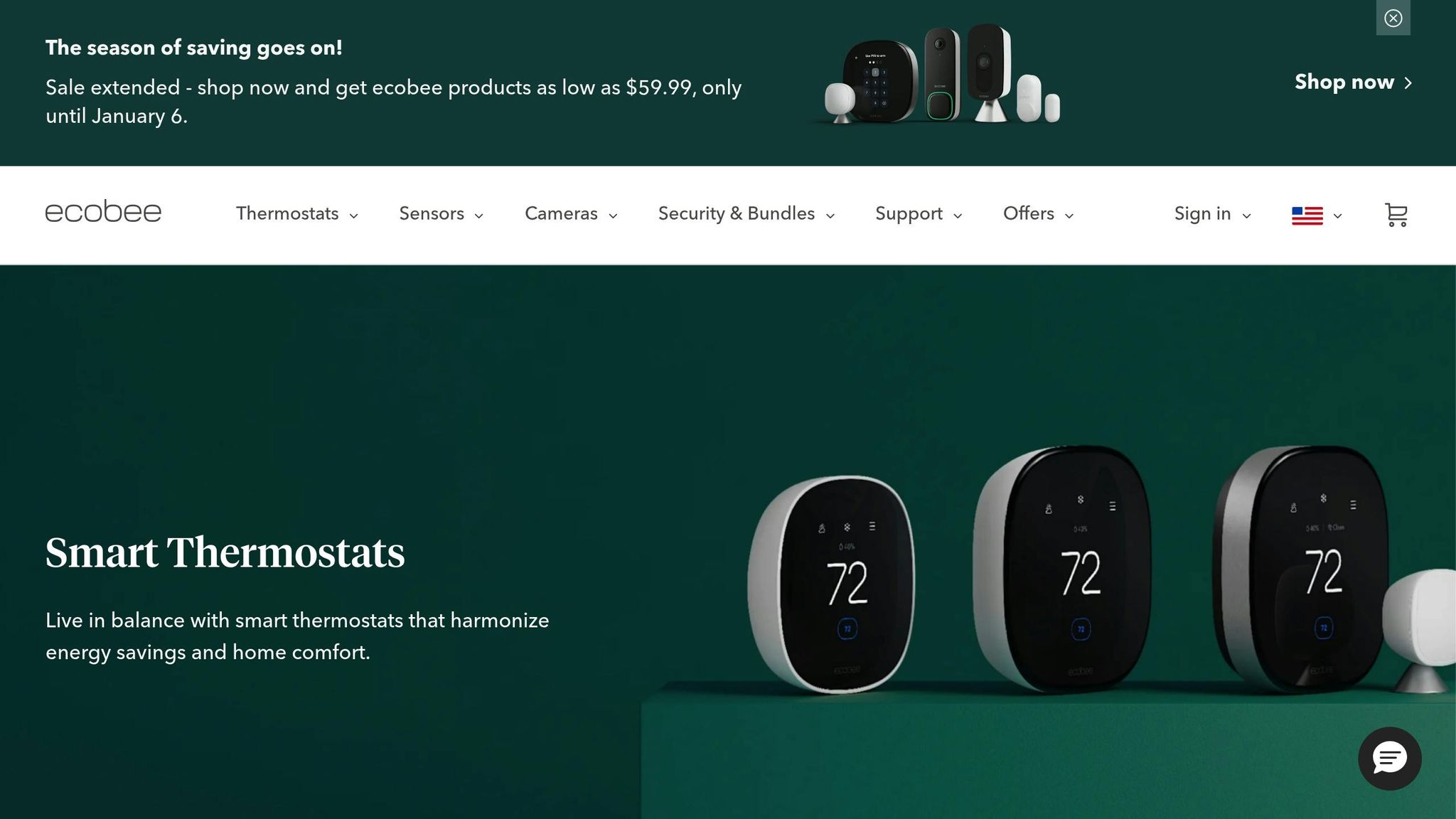
ecobee SmartThermostat with voice control Multiple Zone Installation
How Smart Thermostats Connect with Zoning Systems
Smart thermostats work hand-in-hand with a central zoning control panel to fine-tune temperature control throughout your home. Let’s look at how this system operates, focusing on the role of dampers and the zoning panel.
Zone Dampers and Thermostat Connections
When you adjust a smart thermostat, it sends a signal to the zoning control panel, which activates motorized dampers. These dampers guide conditioned air specifically to the zones that need it.
Think of dampers as the gatekeepers of your comfort. For instance, if a thermostat in an upstairs bedroom requests cooling, the panel opens the dampers for that zone while keeping others closed. Once the dampers are adjusted, the panel communicates with your HVAC system - whether it’s a furnace, air conditioner, or heat pump - to deliver the required heating or cooling. Most residential systems handle 2–4 zones, but advanced setups can manage as many as 10 dampers per zone.
The Role of Zoning Panels
The zoning panel acts as the system's command hub. It collects temperature data and requests from all connected thermostats, then converts these into coordinated actions. If multiple zones request heating or cooling at the same time, the panel prioritizes and resolves these requests - often based on a first-come, first-served approach or by accommodating simultaneous calls if they require the same mode.
"The Zone Control Panel is the central control that will communicate between thermostats, dampers and your HVAC equipment. It is mounted by your equipment and is the brains of the entire zoning application." – ZoneFirst
Advanced zoning panels go a step further by monitoring static pressure in the ductwork. This feature prevents over-pressurization, which could harm components like the blower motor or heat exchanger. To function, most panels rely on a 24V transformer for power and are equipped with a leaving air sensor to safeguard the HVAC system from freezing or overheating.
Sensor-Based Zoning with Smart Thermostats
Sensor-Based vs Traditional Zoning Systems Comparison
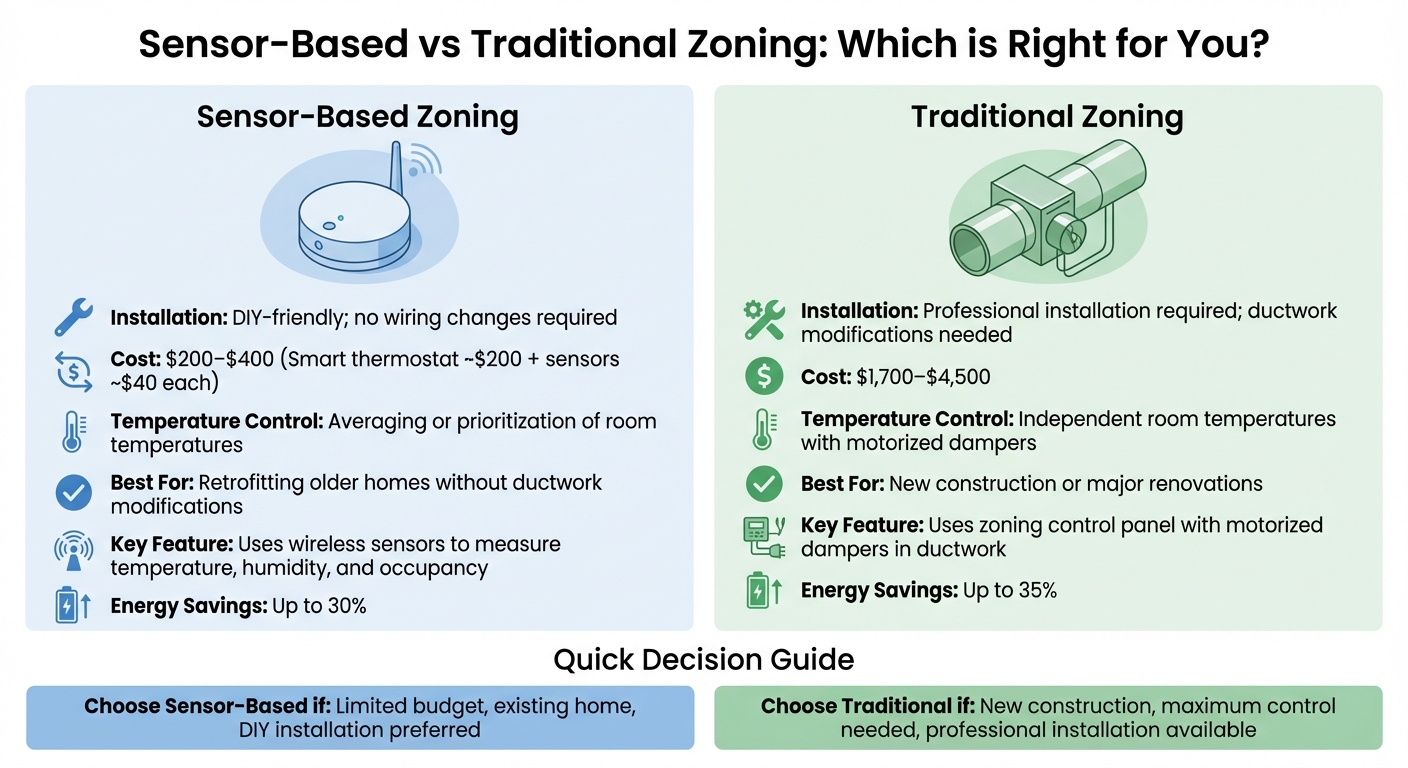
If your home doesn't have a traditional zoning system, you can still enjoy personalized comfort with sensor-based zoning - no major renovations required. Unlike conventional systems that rely on duct dampers and control panels, sensor-based zoning provides a simpler, retrofit-friendly alternative.
How Room Sensors Work with Smart Thermostats
Wireless room sensors are the key players here. They measure factors like temperature, humidity, and even whether someone is in the room. This data is then sent to your smart thermostat.
Your thermostat can use this information in a couple of ways: it can average the readings from multiple sensors to create a balanced comfort level throughout your home, or it can prioritize specific rooms based on your schedule. For instance, the Honeywell T9 and T10 Pro models can work with up to 20 wireless sensors, keeping tabs on several areas at once.
"Smart thermostats allow for a certain level of zoning... the sensors send temperature information back to the thermostat, which can then make the necessary adjustments to match your settings."
– Mullen Plumbing, Heating & Cooling
While this setup doesn’t allow for completely independent room temperatures (since it doesn’t use dampers or smart vents), it adjusts the overall HVAC output based on the sensor data. For true, room-by-room temperature control, you’d need to pair the sensors with motorized smart vents.
This approach offers a practical path to improved energy efficiency and comfort without the complexity of traditional zoning systems.
Benefits of Sensor-Based Zoning
One of the standout benefits of sensor-based zoning is its affordability and ease of installation. Traditional zoning systems can cost anywhere from $1,700 to $4,500 to install. In contrast, a sensor-based setup is much more budget-friendly - smart thermostats start at around $200, with sensors priced at about $40 each. Plus, installation is often a DIY project, as it doesn’t require altering your ductwork.
This system also provides targeted temperature control in areas that need it most. You can place sensors in rooms with unique challenges, like spaces with large windows, high ceilings, or those that are always too hot or too cold. By giving your thermostat a more accurate read of your home’s comfort needs, sensor-based zoning ensures you're not relying solely on the thermostat's fixed location. Add occupancy detection, and you’ll avoid wasting energy on empty guest rooms or offices. In fact, HVAC zoning can reduce energy costs by up to 30%.
| Feature | Sensor-Based Zoning | Traditional Zoning |
|---|---|---|
| Installation | DIY-friendly; no wiring changes | Professional; ductwork required |
| Cost | $200–$400 | $1,700–$4,500 |
| Temperature Control | Averaging or prioritization | Independent room temperatures |
| Best For | Retrofitting older homes | New construction or major renovations |
If you're in Pasco, Pinellas, or Hernando counties and ready to upgrade to a smart thermostat with sensor-based zoning, West Florida Air Conditioning & Heating Inc. offers expert installation and support tailored to your home’s unique needs.
sbb-itb-ab7d5a1
Benefits of Smart Thermostat and Zoning Integration
With sensor-driven precision as the foundation, integrating smart thermostats with zoning systems takes home comfort and efficiency to the next level. Here's how this combination transforms your living space.
Custom Comfort for Every Room
With independent temperature control, each zone in your home gets its own tailored settings. For example, you can keep the upstairs bedrooms at a cozy 68°F while maintaining a comfortable 72°F downstairs. No more compromises - every zone stays just the way you like it.
This setup also eliminates those pesky hot and cold spots many homes struggle with. Heat naturally rises, sun-facing rooms warm up faster, and areas farther from the air handler often feel neglected. Zoning solves these problems by directing conditioned air exactly where it’s needed. Unlike simply closing vents manually - which can disrupt your HVAC system and even cause damage - zoning systems use motorized dampers to safely manage airflow.
Occupancy sensors add another layer of efficiency, focusing heating or cooling on rooms that are actually in use. For example, bedrooms stay comfortable at night, while empty living areas use less energy. Plus, with smartphone apps, you can adjust zone temperatures remotely. Whether your plans change or you’re just heading home, you can ensure every zone is at the perfect temperature when you walk in. This level of control doesn’t just improve comfort - it also sets the stage for noticeable energy savings.
Energy Savings and Lower Utility Bills
Did you know that heating and cooling account for nearly 50% of your home’s total energy bill? Zoning systems help you cut down on wasted energy by focusing only on the spaces that need conditioning. Research shows that, on average, only about two-thirds of your home requires temperature adjustments at any given time. Why spend money heating or cooling unused guest rooms or home offices?
"Homeowners who install a zoning system typically see HVAC operating costs decline by up to 30 percent." – Bryans United Air Conditioning
Zoning systems also work more efficiently by reaching the desired temperature faster and cycling less frequently. This reduces your monthly utility costs, with most homeowners seeing a 15% to 25% drop in energy bills. And when paired with a smart thermostat that uses learning algorithms and occupancy detection, savings can climb even higher - up to 35%.
By targeting specific areas, zoning not only lowers energy costs but also reduces wear and tear on your HVAC system. This means fewer repairs and a longer lifespan for your equipment.
Improved Automation and Scheduling
Smart thermostats bring advanced automation to your zoning system, learning your daily routines - when you wake up, leave for work, or head to bed - and adjusting temperatures in each zone accordingly. This ensures comfort while cutting energy waste.
Dynamic scheduling takes things further by adapting to real-time changes in your routine. Whether you're home early or hosting guests, the system adjusts to keep you comfortable without wasting energy.
"By only heating or cooling the zones that are occupied, zoning systems prevent energy waste and ensure optimal comfort where it's needed most." – Cascade Energy Services
For example, in September 2025, Lawrence Air Systems completed a zoning upgrade for a two-story colonial home in Seekonk. Before the installation, the family had to over-cool the downstairs just to make the upstairs bedrooms comfortable. By creating two separate zones with independent smart thermostats, they eliminated temperature complaints and cut their annual energy bills by 20%.
If you’re in Pasco, Pinellas, or Hernando counties, West Florida Air Conditioning & Heating Inc. can help you enjoy these benefits with expert smart thermostat and zoning installation tailored to your home’s unique needs.
Common Challenges in Smart Thermostat Zoning
Pairing smart thermostats with zoning systems can deliver impressive results, but the process isn't always seamless. Being aware of common challenges - and how to tackle them - can save you time, money, and headaches.
Compatibility Issues and Solutions
One of the most common hurdles is the C-wire requirement. Most smart thermostats need a continuous 24V power supply, delivered through a common wire, to support Wi-Fi and display functions. However, older mechanical thermostats often operate with just two wires (red and white), leaving no C-wire available. Without it, your smart thermostat might lose Wi-Fi connectivity or shut down entirely.
If your system lacks a C-wire, there are a few workarounds:
- Install a C-wire adapter, such as a Nest Power Connector, to supply the needed power without rewiring.
- Repurpose the green fan wire (G) as a C-wire by connecting it to the C terminal at both ends. Be aware, though, that this eliminates independent fan control.
Some zoning systems complicate matters further with proprietary wiring (e.g., terminals labeled "MISC" or "Damp") that aren't compatible with standard smart thermostats. If you encounter these, you may need to replace your zone panel with a standard 24V version or consult a professional for brand-specific solutions.
Another potential issue is voltage mismatch. While most smart thermostats operate on low voltage (24V), homes with electric baseboard heaters use line-voltage systems (120V or 240V). If you see wires with wire nuts and voltage labels like 110V, 120V, or 240V, you’ll need a specialized line-voltage thermostat, such as the Mysa. Installing a low-voltage device on a high-voltage system can lead to fires or equipment damage.
Here's a quick breakdown of common issues and their fixes:
| Issue | How to Identify It | Solution |
|---|---|---|
| Missing C-Wire | Only two wires (red/white) at the wall | Add a C-wire adapter or use a Nest Power Connector |
| Proprietary Wiring | Terminals labeled "MISC" or "Damp" | Replace the zone panel or consult a professional |
| High Voltage | Wires with wire nuts and voltage labels (e.g., 110V, 120V, or 240V) | Use a line-voltage smart thermostat like Mysa |
| Insufficient Power | Thermostat loses Wi-Fi or shuts down often | Add a proper C-wire connection or install a dedicated transformer |
Addressing these compatibility issues is key to ensuring your smart thermostat zoning system runs smoothly.
Electrical and Installation Considerations
Smart thermostats rely on triacs, which can sometimes cause leakage currents. These currents may lead to damper chattering, but adding a resistor or securing a proper C-wire connection typically resolves the problem.
In zoned systems, thermostat wires connect to a central control panel. This panel must be configured correctly for the type of damper actuators in use, such as "Spring Return" or "Power Open/Power Closed." Incorrect wiring can damage critical components like the compressor or heat exchanger.
Professional installation is highly recommended to ensure your system is wired properly, static pressure is safely regulated, and everything complies with industry standards. While DIY installation might seem tempting, improperly installed systems can actually increase energy usage by overworking your equipment.
If you're in Pasco, Pinellas, or Hernando counties, West Florida Air Conditioning & Heating Inc. provides expert smart thermostat and zoning installation services. They’ll make sure your system operates safely and efficiently from day one.
Conclusion
Smart thermostats combined with zoning systems give you the power to control the temperature in different areas of your home independently. Want a cozy 68°F in the bedroom while keeping the living room at a comfortable 72°F? No problem. This setup eliminates common issues like chilly basements or overheated upstairs bedrooms, putting an end to temperature disagreements once and for all.
Zoning systems are also incredibly efficient. By focusing on occupied spaces, they help cut down on wasted energy. In fact, studies reveal that HVAC zoning can reduce heating and cooling costs by as much as 35%, lower overall energy expenses by 30%, and only condition about 66% of your home’s square footage at any given time. On top of saving money, this approach can help your HVAC system last longer.
Here’s how: zoning reduces the workload on your HVAC equipment by running shorter cycles and targeting smaller areas. This means less stress on key components like compressors and blowers, which can extend their lifespan. While the upfront cost for a zoning system typically ranges from $1,700 to $4,500, the savings on utility bills and maintenance make it a smart investment in the long run.
If you’re in Pasco, Pinellas, or Hernando counties, West Florida Air Conditioning & Heating Inc. offers professional installation to ensure your system performs flawlessly from the start. With their expertise, you can enjoy customized comfort and energy efficiency without worrying about installation mistakes.
FAQs
How do smart thermostats work with zoning systems to save energy and lower utility bills?
Smart thermostats and zoning systems team up to make your home's heating and cooling more efficient, helping you save energy and cut costs. Smart thermostats are designed to learn your routine, automatically adjusting the temperature when you're not home or during the night. This ensures you're not wasting energy on heating or cooling an empty house. Zoning systems, on the other hand, split your home into distinct areas, or "zones", each with its own temperature control. By using motorized dampers or individual thermostats, these systems ensure that heating or cooling is directed only to the areas where it's needed.
When these two technologies work together, your HVAC system operates more effectively, reducing strain on the equipment and keeping energy bills lower. It's an easy way to enjoy customized comfort while avoiding unnecessary energy consumption.
What challenges can arise when installing smart thermostats with zoning systems?
Installing smart thermostats in homes with zoning systems can be tricky because it requires seamless coordination between the hardware and software. To start, your HVAC system needs essential components like motorized dampers, a zoning panel, and a bypass or pressure-relief damper to regulate airflow. These parts must be wired and calibrated correctly, which can become especially challenging in older homes where the wiring infrastructure may be outdated or limited.
Another hurdle is ensuring that sensors are placed in the right spots and that your Wi-Fi connection is stable. If sensors are poorly positioned or the Wi-Fi signal is weak, it can lead to uneven temperatures across zones or cause your HVAC system to short-cycle - both of which waste energy and reduce comfort. On top of that, not every smart thermostat works with every zoning panel, so it's essential to verify firmware compatibility before installation.
Given these complexities, professional installation is often the best route to ensure everything runs smoothly. Experts like West Florida Air Conditioning & Heating Inc. can handle the intricate wiring, optimize sensor placement, and fine-tune your system to deliver consistent airflow and maintain comfort throughout your home.
Can smart thermostat zoning be added to older homes without major renovations?
Adding smart thermostat zoning to older homes is entirely possible, and it doesn’t require major renovations. Thanks to wireless temperature sensors and optional motorized vents, you can upgrade your home’s heating and cooling system without cutting into ductwork or making big structural changes.
This setup allows you to control temperatures in specific areas of your home with precision, improving comfort and helping you save energy - all without the stress of a full-scale remodel.